
Major Acquisition Changes Dropped from Final 2026 Defense Bill
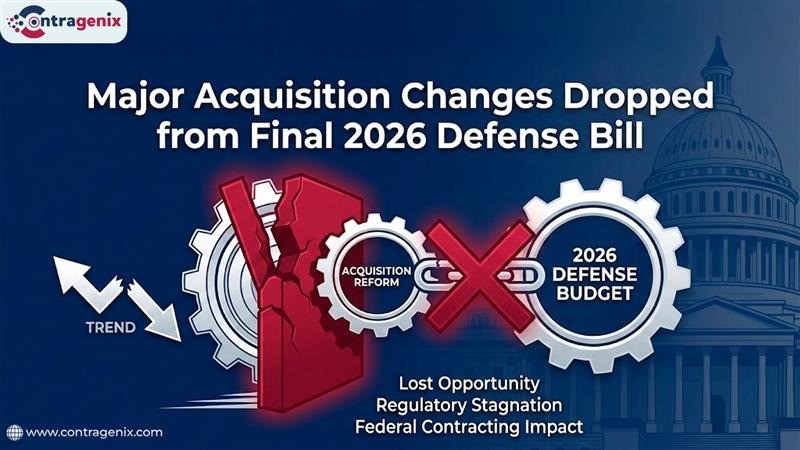
Federal contractors walked into this year expecting one thing: real, structural acquisition reform. But when the final 2026 Defense Bill landed, many of the most significant proposed changes were quietly stripped out. That decision didn’t just shape policy; it shaped the future environment that every contractor will navigate, including pricing, oversight, competition, and innovation. If you’re bidding, pricing, or building long-term relationships with DoD primes, this shift changes your roadmap.
Quick snapshot: What was removed (Why it matters)
Congressional negotiators stripped several headline reforms from the final FY2026 defense policy bill. Among the biggest were tighter rules around pricing transparency, stronger statutory oversight and reporting timelines for major acquisition programs, and sharper limits or reporting requirements for Other Transaction Authority (OTA) deals. Those omissions mean fewer immediate legislative levers to force faster transparency, increased GAO-level oversight, or new competition guardrails in AI/cloud buys.
Two practical examples from the final negotiations: proposals that would have limited the use of old cost/pricing data and measures requiring DoD to alert Congress within 30 days of major cost overruns were both dropped. The House asked for stricter limits on tech giants’ sway over cloud and AI awards, but those didn’t survive either. Instead, Congress punted to studies and briefings, directing agencies and watchdogs to report back.
What this means for Federal Contractors
-
Pricing risk stays front and Centre: Without new limits on old cost data, DoD and contractors will continue to work under the current Truth in Negotiations Act rules and post-award reviews rather than have pre-approved pricing. This means the risk of defective pricing and unexpected cost increases stays the same.
-
OTAs remain a double-edged sword. Congress did not add stricter reporting or require major OTA projects to follow the same oversight as big defense programs. OTAs will still move fast on prototypes and innovation, but it’s unclear whether they reliably lead to full production.
-
Small-business and workforce nudges were dropped. Proposals to set DoD targets for veteran-owned small businesses and standardize reporting on veteran employment didn’t pass. Small business advocates will still need to push through policy and procurement teams rather than rely on new laws.
Practical playbook: 6 concrete steps contractors can take now.
These aren’t theoretical, these are actions you can take immediately:
-
Tighten your pricing documentation now: Don’t wait for new laws. Assume DoD will review price reasonableness after award. Run quarterly audits, freeze cost data versions during negotiations, and document dated assumptions so you can defend pricing later.
-
Map OTA exposure and strategy:If you use OTAs for innovation, keep clear plans for moving from prototype to production. Track follow-on chances and budget for contract transitions.
-
Sharpen competitive positioning in cloud/AI procurements: Congress didn’t add new competition rules, but agencies still need justification for single-source or big-tech awards. Build and document alternative pathways and partner networks to show real competition.
-
Lean into relationships with agency acquisition teams: Without statutory mandates, influence comes from program offices. Invest in regular technical briefings, outcome demos, and program metrics to become a trusted partner.
-
Double down on small-business teaming and VOSB claims: Statutory targets didn’t pass, but document veteran-owned subcontracts, staffing plans, and results. Show DoD that your firm is already delivering what Congress intended.
-
Prepare for oversight via studies, not mandates: Congress ordered DoD, GAO, and others to study issues such as OTAs and late-cost disclosures. Expect reports and briefings next year, use these to position your firm as a source of evidence and best practices.
Real Example: A Short Case Study
Imagine a mid-size systems integrator that won an OTA-funded AI prototype contract in 2024. They originally planned for a smooth transition to a production contract in 2026. With the final FY2026 bill not requiring OTA follow-on reporting or production oversight, that handoff was far from guaranteed.
The firm took three key steps to protect its position:
-
Created a modular product roadmap showing clear production value for the warfighter.
-
Built a competing cloud/AI partner roster so the agency could demonstrate competition if questioned.
-
Kept a small contingency budget for future work to cover potential cost overruns.
These actions helped the firm navigate the uncertainty and stay well-positioned for the next contract phase.
What to watch next: Upcoming GAO and DoD studies
Congress has asked DoD and GAO to study practices such as late-cost disclosures and OTA follow-on use. New reports and briefings will be released, and agencies will pay close attention to contractor practices to support their testimony. GAO studies often influence acquisition culture, so contractors should monitor these reports and be ready to provide data or case studies if GAO requests industry input. Stay ahead of FY2026 acquisition changes.
Contragenix helps federal contractors navigate OTA strategies, pricing risks, and AI/cloud procurements, turning uncertainty into opportunity.
Connect with us today and secure your competitive edge.