
Latest Developments Impacting Government Contractors
Introduction
As the government shutdown stretches into its third week, federal contractors are facing mounting uncertainty across financial, compliance, and operational lines. From funding standoffs in Congress to shifts in DCAA audit scrutiny, the month’s developments are a reminder that GovCon leaders must remain agile, data-minded, and proactive in documenting and mitigating risk. Here’s a concise analysis of what you need to know and what actions your team should consider right now.
The Long Shutdown: Why Tracking Costs Now Matters
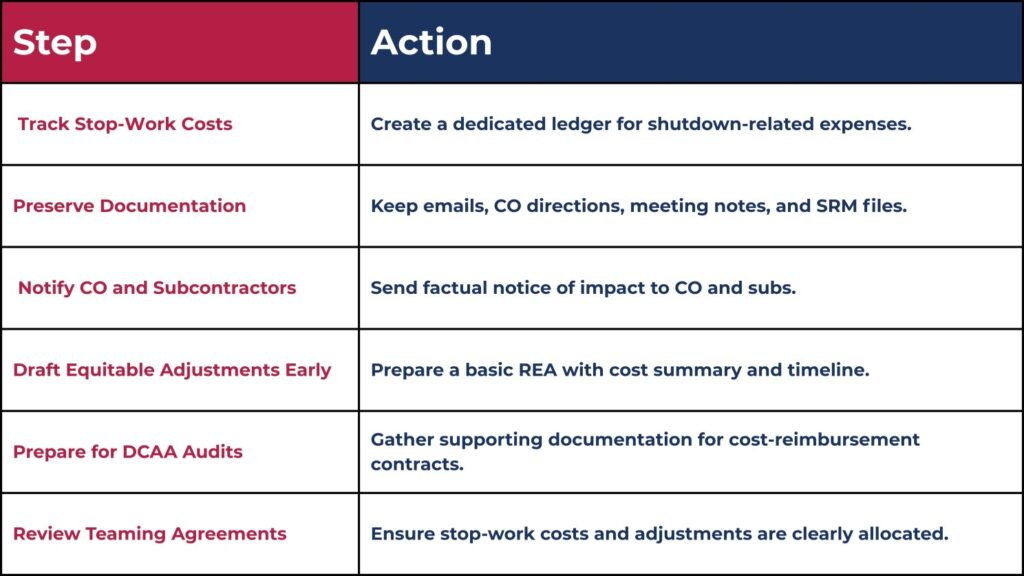
The federal government’s ongoing shutdown has paused many projects, delaying payments and creating uncertainty for contractors. While agencies wait, contractors must act. Under FAR Part 52.243-1, contractors have 30 days after work resumes to file claims for extra costs or schedule adjustments. This makes accurate tracking of time, labor, and expenses during the shutdown essential. Keeping detailed records now ensures contractors can recover costs, justify schedule changes, and minimize disputes once projects restart. Preparation today directly impacts how smoothly recovery happens tomorrow.
Emerging Legislation: Protecting Contractors and Federal Employees
Rep. Suhas Subramanyam (D-VA) has reintroduced a bill aimed at easing financial strain for furloughed federal employees and contractors. The proposal focuses on flexible contract payments and continuous project funding. While still under review, its bipartisan support highlights that current compensation rules during shutdowns are often inadequate.
For small businesses operating on tight margins or with cost-reimbursement contracts, this bill could provide much-needed relief, especially if it allows contract funding to continue uninterrupted through lapses. Keeping an eye on this legislation will be important for strategic fiscal planning.
Rising Compliance Risks for Government Contractors in 2025
Compliance risk for government contractors is rising due to two main factors. First, the DCAA is increasing audits of cost-reimbursement contracts, focusing on accounting systems, labor costs, and indirect rates to ensure all claimed costs are reasonable and supported. Second, the DOJ is expanding the False Claims Act to include issues like employing unauthorized workers, increasing legal exposure beyond traditional fraud. Contractors should strengthen compliance programs and maintain thorough documentation to reduce audit and enforcement risks.
Policy Confusion: Back Pay Assurance Restored by Administration
The administration recently clarified that furloughed federal employees are guaranteed back pay once funding is restored. For government contractors, the key point is that contractor staff are not automatically covered by this rule. Contractors should therefore have clear policies for pay during stand-by periods, reassignments, or suspensions to avoid disputes and maintain employee morale.
Labor Department Pilots Centralized Unemployment Claims
Another development contractors should monitor closely is the Labor Department’s pilot program exploring federal-level intake of state unemployment claims. While the initiative is framed as an efficiency measure, it brings several considerations for federal contractors:
-
Data Privacy and Cybersecurity: Consolidating state-level claim data at a federal level raises concerns about safeguarding sensitive personal and employment information. Contractors supporting systems that integrate state claim data must ensure robust cybersecurity protocols.
-
Implications for Contractors: Those in workforce analytics, IT support, or data management roles may face updated statements of work, new compliance requirements, or revisions to data handling procedures aligned with federal privacy and data standardization frameworks.
Best Practices for Contractor Communication During Policy Volatility
The Bottom Line: Adapt Now, Recover Later
The uncertainty of this ongoing shutdown is not just a test of funding resilience; it’s a test of organizational discipline. Contractors that document impacts rigorously, audit their cost compliance readiness, and engage teams with accurate, plain-language updates will recover faster and strengthen agency confidence post-lapse.
Policy landscapes evolve fast in GovCon, but the most recession-proof strategy remains the same: stay informed, stay compliant, and stay connected.