
GSA Cuts Old Rules and Saves Nearly $1 Billion
The General Services Administration announced a sweeping deregulatory push that it says will save taxpayers nearly $1 billion over the next decade and it directly touches rules contractors live and bid under. U.S. General Services Administration
What GSA Actually Cut
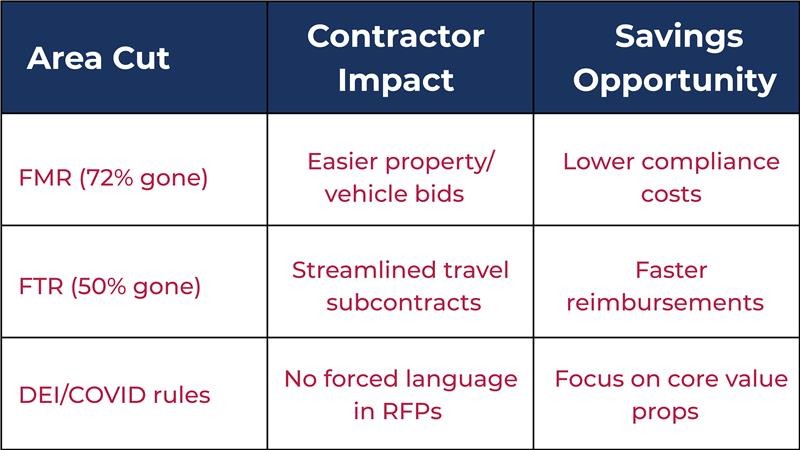
GSA’s Office of Government-wide Policy took a hard look at aviation, mail, motor vehicles, property, relocation, and travel, basically every Federal Management Regulation (FMR) and the Federal Travel Regulation (FTR) line on the table. They removed rules that were duplicative or not required by statute, including sustainable travel mandates and Art in Architecture requirements. In total, that’s 194 pages removed from the Federal Register
Now, instead of dense regulations, agencies get non-regulatory guidance that keeps the legally required pieces and strips out the vague or redundant parts. Early estimates show about $19.3 million in direct savings just from these cuts, Bottom line: faster agency decisions and less logistical red tape in proposals.
Wins for Federal Contractors
With fewer rules, bidding gets easier on vehicles, travel services, property management, and asset support contracts. Think of it like this, no more scrambling to meet DEI checkboxes or alternative fuel quotas in your pricing models. Cleaner requirements = better margins and more substantial win probability.
Actionable Playbook: 5 Practical steps you can do this week
-
1. Run a 2-hour contract clause sweep: Take your top 10 active federal contracts and scan them for any mentions of FMR, FTR, travel, vehicles, or advisory committee requirements. Highlight anything that could impact cost estimates or delivery timelines. The goal is to quickly spot clauses that may need updating after recent regulatory changes.
-
2. Revisit travel and indirect cost assumptions. If the new rules reduce travel or relocation requirements, you may be able to lower admin-related costs. This could mean higher margins or leaner pricing in proposals. Also check if any compliance paperwork can now be simplified or removed.
-
3. Talk pricing with capture leads. For ongoing bids, create two pricing models: Baseline (current assumptions) Post-dereg (revised lower-cost assumptions if rules allow) This gives your team flexibility; you can adjust pricing strategically without rebuilding the entire proposal.
-
4. Update proposal templates and compliance checklists. Remove outdated requirements but keep a record of every update and attach a note referencing the GSA reform announcement for audit transparency. Documentation keeps you safe if compliance questions arise later.
-
5. Communicate to subcontractors and vendors.Let partners know about potential changes in travel or fleet rules early. Subcontractor invoices and timelines might shift, so send a short advisory update and hold a quick alignment call to avoid surprises later.
Each step takes time, but all are manageable in sprints and small administrative updates now can prevent invoice disputes later.
Strategic moves: How to win more and faster
-
1.Pitch streamlined delivery. Agencies will advertise efficiency wins. Where you can credibly promise faster approvals, fewer paperwork bottlenecks, or lower T&M administration, make that a capability claim in proposals.
-
2.Lean into timing. If agencies are actively implementing these changes this fiscal year, pre-positioning (e.g., offering a “fast-start” onboarding or reduced travel admin) can be a differentiator on mission-critical solicitations.
-
3. Re-evaluate risk reserves.If regulatory friction decreases, some contingency reserves in pricing may be trimmed, but only after legal/compliance signs off.
In short: treat this like a brief window of competitive advantage. Move quickly but document every compliance step.
Risk checklist: What to watch
-
1Compliance traps: don’t remove required clauses until the agency publishes formal implementing guidance. The GSA press release is the start, not the complete legal playbook.
-
2. Procurement timing: agencies may phase changes; some solicitations will still expect legacy language until the update is formally incorporated. Confirm solicitation language first.
-
3.Public perception & partner sensitivities: the release references broad deregulatory priorities that include rescinding DEI preferences; be prepared to answer partner questions and handle public-facing messaging carefully.
Conclusion
GSA’s deregulation removes old rules and creates more flexibility for federal contractors. With fewer regulations and nearly $1B in projected savings, those who act quickly updating contracts, pricing, and processes can work more efficiently, improve margins, and win more work.
In short: this isn’t about fewer rules; it’s about more room to operate. Treat this as a window to tighten operations, sharpen competitive edge, and claim space while others are still decoding the fine print. The door is open, step through it.
Read More: U.S. General Services Administration