
Defense Acquisition Reform: A New Era for Federal Contractors

What’s Changing—and Why It Matters
The Secretary of War’s announcement marks a significant shift for everyone in the federal contracting community. Acquisition reform is not just about new policies; it’s about changing how Defense manages contract requirements, evaluates performance, and selects industry partners. These changes aim to create a faster, fairer, and more competitive system where both small businesses and established contractors have real opportunities to succeed.
For contractors, this reform isn’t a distant bureaucratic change; it’s a practical set of rules that will impact every proposal, negotiation, and future contract. These initiatives are based on memorandums mentioned by Secretary Pete Hegseth, along with the new Acquisition Transformation Strategy. Together, they challenge current practices and encourage contracting teams to rethink how they plan, execute, and measure results.
The Heart of Reform: Accountability, Clarity, and Speed
-
Clearer Requirements: The Department of War (DOW) is moving toward open, outcome-focused contract requirements. This will make it easier to understand what agencies want and how your project will be evaluated. Vague statements of work will be replaced with clearer milestones and deliverables.
-
Modern Evaluation: The reform sets aside subjective performance reviews and personal relationships, focusing instead on hard data compliance logs, milestone records, and documented issue resolutions.
-
Faster Decision Cycles: By adopting streamlined acquisition practices, the government aims to reduce response times and lower barriers for innovative small businesses.
These reforms are designed to protect contractors’ interests by reducing uncertainty and creating a more predictable environment. The process will focus less on navigating personalities and more on showing clear, documented excellence.
What Contractors Should Expect
1. More Rigorous Performance Tracking
Your performance won’t be judged by opinions or stories. From now on, every milestone, compliance check, and issue resolution will be matched against data-backed records. Missed deadlines, unresolved disputes, or compliance gaps will be logged automatically, leaving little room to explain your side afterward. Consistently proving reliable results, rather than just explaining mistakes, will be crucial.
2. Greater Weight on Each Event
Since the evaluation system is shifting to event-driven metrics, a single major issue, a cybersecurity lapse or a safety violation could have a bigger impact on your record than ever. Quick responses and clear documentation of corrective actions will help safeguard your reputation. Contractors who identify and resolve problems early will stand out, while those who delay or ignore issues will feel the consequences.
3. New Relationships with Contracting Officers
Contracting Officers (COs) will mainly record data rather than craft lengthy narratives. While this reduces room for bias, it also limits your opportunity to provide additional context. Maintaining professional, transparent communications before issues arise will help ensure your side is fairly represented. Build trust upfront, and keep your documentation organized.
How to Prepare Your Business Today
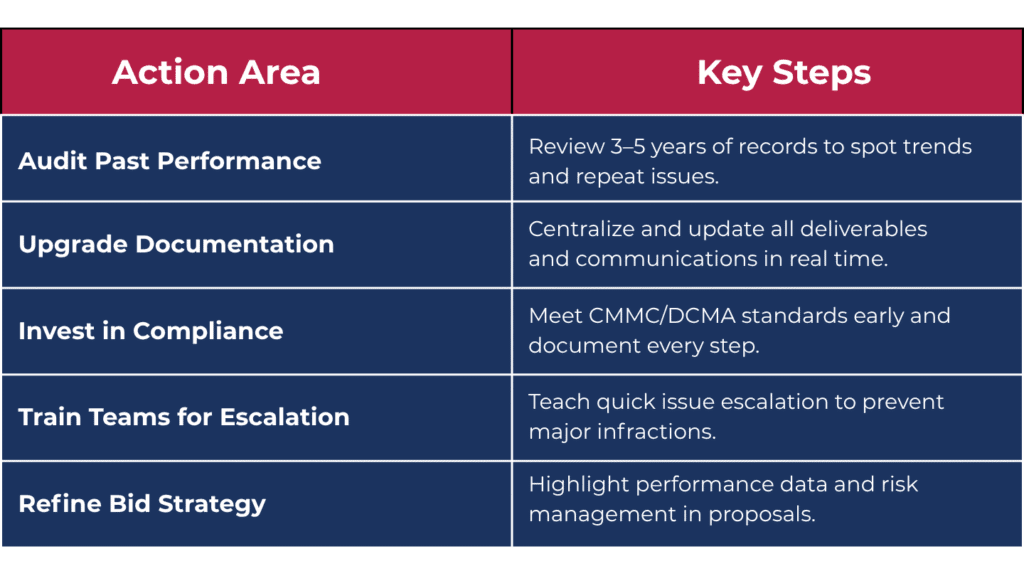
Dispelling Myths: What the Reform Is and Isn’t
-
Positive Performance Still Counts: Even if the system focuses on negative events, strong performance helps you secure recompetes and build your business’s reputation as reliable.
-
Appeals Depend on Documentation: You still have the right to appeal, but everything will hinge on digital records—not personal explanations.
-
Subcontractors Are Included: You don’t need to be a prime contractor to be affected; every business inputting data into federal databases must prioritize compliance.
Turning Compliance into Competitive Advantage
The bottom line? These acquisition reforms provide a unique opportunity to rise above old habits and position your business as a leader in the new era. If your operations are transparent and your systems are precise, you’ll gain not just compliance but a competitive edge.
-
Proactive Compliance: Investing early in training, system upgrades, and documentation will lead to higher scores and less risk.
-
Opportunity for Innovation: With clearer requirements and faster processes, small businesses can propose innovative solutions and take bolder risks, knowing the rules are fair and clear.
-
Stronger Partnerships: Agencies want to work with contractors who best manage change, communicate openly, and provide trustworthy performance data.
What Contractors Need to Know Now
This isn’t a time for fear; it’s a time for preparation, diligence, and optimism. In the new marketplace, credibility will come from careful record-keeping, transparency, and the willingness to treat each contract as an opportunity for growth.
We at Contragenix believe the reform is an invitation to every contractor, not just “big players”—to compete with integrity and heart.
Ultimately, if your team meets challenges proactively and documents every step, you’ll find opportunity where others see only obstacles.